.png)
High-Functioning Anxiety: Signs & Coping Tips


What Is High-Functioning Anxiety?
High-functioning anxiety is when you appear calm, responsible, and productive on the outside—but inside, your mind is constantly racing. You meet deadlines. You show up on time. You handle responsibilities well.
But mentally? You’re overthinking. You’re worrying. You’re never fully relaxed.
High-functioning anxiety doesn’t look like panic attacks. It often looks like “being very capable.” And that’s why it goes unnoticed.
Signs of High-Functioning Anxiety
Here are some common signs of high-functioning anxiety:
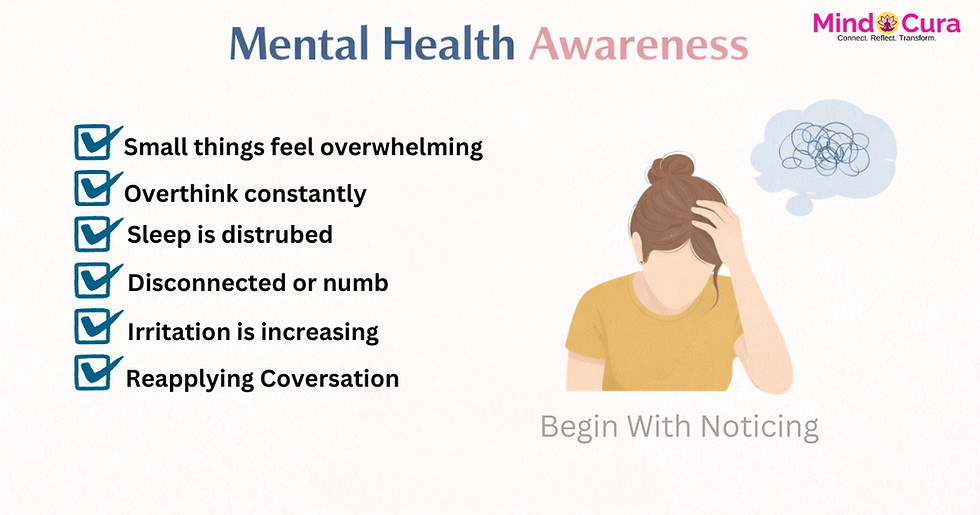
You overthink small decisions.
You replay conversations in your head.
You feel guilty when you rest.
You fear disappointing others.
You say “yes” even when you’re exhausted.
You always feel slightly behind.
You struggle to switch off at night.
You need control to feel calm.
You may look confident to others—but inside, there is pressure.
A Real-Life Example of High-Functioning Anxiety
Riya works in a corporate office. Her boss loves her. She finishes everything before time.
But every night:
She rechecks her emails.
She worries she said something wrong.
She feels she’s “not doing enough.”
She hasn’t missed a single deadline. Yet she constantly feels like she might fail.
That’s high-functioning anxiety.
It doesn’t stop you from functioning. It just makes functioning very heavy.
10-Question Self-Check: Do You Have High-Functioning Anxiety?
Answer Yes or No:
Do you constantly overthink past conversations?
Do you feel uncomfortable when you’re not productive?
Do people describe you as “strong” or “reliable,” but you feel anxious inside?
Do you struggle to relax without feeling guilty?
Do you fear making mistakes more than others seem to?
Do you check and re-check your work excessively?
Do you have trouble sleeping because your mind won’t stop?
Do you take on more than you can handle?
Do you avoid asking for help?
Do you feel pressure to appear “in control”?
If you said “Yes” to more than 5, high-functioning anxiety may be something you’re dealing with.
Why High-Functioning Anxiety Is So Hard to Notice?
Because success hides it. People think: “You’re doing fine.”“You’re managing everything.”“You’re so organised.” But internally, there is constant pressure.
High-functioning anxiety rewards you for being anxious—because anxiety makes you perform. That makes it harder to stop.
Quick On-the-Spot Techniques for High-Functioning Anxiety
These are simple. You can use them immediately.
1. The 3-Minute Pause
Stop what you're doing. Take 5 slow breaths. Ask: “What am I afraid will happen?”
Just naming the fear reduces its power.
2. Lower the Standard Slightly
Instead of perfect, aim for “good enough.”
Send the email once. Don’t re-read it 6 times.
Nothing terrible will happen.
3. Body Reset
Anxiety lives in the body.
Unclench your jaw
Drop your shoulders
Relax your tongue from the roof of your mouth
Small physical shifts calm mental pressure.
4. Replace “What If” with “Even If”
Instead of: “What if I mess up?”
Say: “Even if I mess up, I can handle it.”
It brings control back to you.
5. Set a Worry Time
Give yourself 10 minutes in the evening to worry freely. Write everything down.
When worries pop up during the day, say: “I’ll think about this at 7 pm.”
This trains your brain not to stay in constant alert mode.
Healing High-Functioning Anxiety
Healing doesn’t mean becoming lazy or careless.
It means:
Doing well without self-punishment.
Being productive without panic.
Resting without guilt.
You can still be responsible. You can still be ambitious. But you don’t have to suffer silently while doing it. High-functioning anxiety is common. It is manageable. And it is okay to ask for support.
If you're reading this and quietly thinking,“This sounds like me” —You're not weak. You're tired of carrying invisible pressure. And that’s a very human place to start healing. 🌿
I offer a free 15-minute talk therapy session to help you understand what’s happening internally and what might help.
It’s okay to need support.


Comments